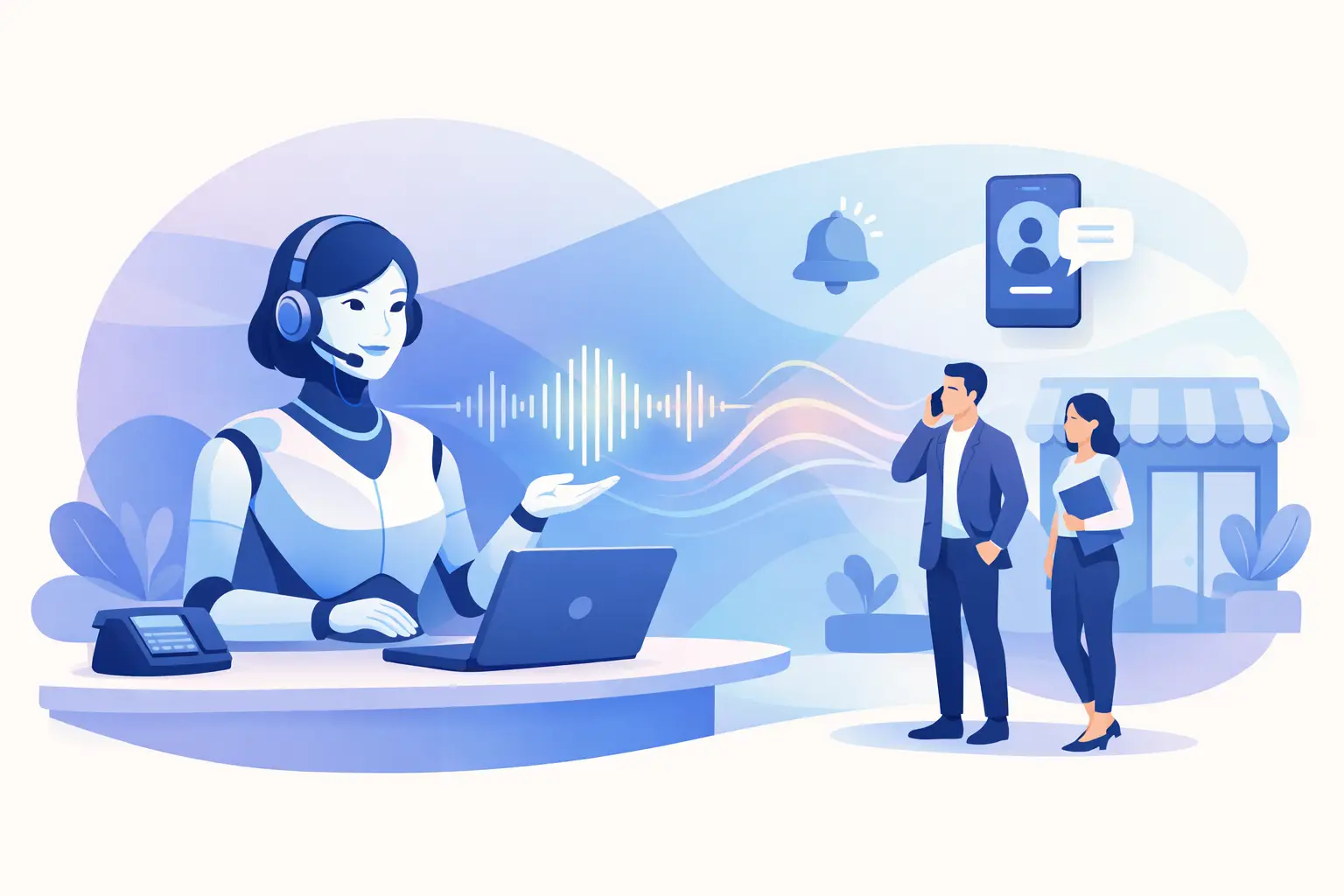
A missed call rarely feels expensive in the moment. But if you run a service business, a dental office, a law firm, a med spa, or any local company that depends on inbound calls, that one missed call can be a booked job, a new patient, or a high-value client going somewhere else. That is why an ai voice receptionist for small business is getting serious attention from owners who are tired of watching revenue slip through the cracks.
This is not about replacing people for the sake of it. It is about closing a very specific gap that shows up every day in small businesses: phones ring when staff are busy, after hours, during lunch, in the middle of an appointment, or when the front desk is already juggling three things at once. The result is inconsistent call handling, weak follow-up, and lost trust before the customer ever walks through the door.
Why missed calls cost more than most owners think
Most owners underestimate the real cost because they only count the calls they know they missed. They do not count the people who hung up after two rings, the prospects who never left a voicemail, or the customers who called a competitor immediately after getting no answer.
There is also a second loss that gets less attention: reputation. When callers have a frustrating first interaction, they are less likely to book and less likely to leave a positive review later. If your business depends on local search, referral traffic, and trust, that weakens your pipeline twice. You lose the immediate sale and you lose future credibility.
An AI receptionist changes that equation by making sure calls are answered consistently, quickly, and professionally, even when your team cannot get to the phone. For small businesses, that matters because growth is often limited by operational bottlenecks, not demand.
What an AI voice receptionist for small business actually does
At the basic level, an AI voice receptionist answers inbound calls, greets the caller, understands what they need, and takes the next appropriate action. That action could be booking an appointment, collecting lead information, answering common questions, routing urgent calls, or sending a follow-up text.
The value is not just that it answers the phone. The real value is that it does the same job every time.
A human front desk can be excellent, but small business reality is messy. People get interrupted. New staff need training. Peak-hour call volume creates gaps. After-hours coverage is expensive. An AI receptionist gives you consistency where many businesses currently have none.
That said, not every call should be handled the same way. A plumbing emergency at 9:00 p.m. is different from a routine pricing question. A law firm intake call is different from a salon reschedule request. The best systems are built around your call flows, your offers, and your business rules, not generic scripts.
Where small businesses see the biggest return
The biggest return usually shows up in three places: captured leads, booked appointments, and better review generation.
First, lead capture improves because the business stops relying on voicemail and call-backs alone. Speed matters. When someone is calling around for service, the company that responds first often wins.
Second, booking rates improve when callers can get help immediately. People are far more likely to schedule when the process happens on the spot instead of requiring a later follow-up.
Third, customer experience gets tighter. When communication is faster and more organized, you create more satisfied customers, which creates more opportunities for positive reviews. For many local businesses, reviews are not a branding extra. They are a revenue driver.
This is why companies like Digital Workforce 360 position AI call handling as revenue recovery, not just automation. The issue is not that your team is lazy or careless. The issue is that missed communication creates hidden losses that add up fast.
AI voice receptionist for small business vs hiring more staff
Hiring another receptionist sounds like the obvious fix, but it is not always the smartest one.
A new hire adds payroll, training time, scheduling complexity, turnover risk, and limited coverage hours. Even a strong employee cannot answer every call while handling in-person customers, admin work, and interruptions. If your call problem happens during busy stretches and after hours, adding one person may only patch part of the issue.
An AI voice receptionist is often a better fit when the goal is coverage, speed, and consistency. It can handle overflow, nights, weekends, and repetitive inquiries without creating another management burden.
That does not mean AI should replace every person at the front desk. In many businesses, the best setup is hybrid. Let AI handle first response, basic intake, routine booking, and common questions. Let your staff handle exceptions, high-emotion calls, and relationship-heavy conversations. That approach protects customer experience while removing the repetitive workload that causes missed opportunities.
What to look for before you choose a system
Not all AI receptionists are built for revenue impact. Some are little more than glorified phone trees with better voices. That is not enough.
You want a system that can hold a natural conversation, collect the right information, and move the caller toward an outcome that matters to your business. For one company, that may be appointment scheduling. For another, it may be lead qualification, emergency routing, or review follow-up.
You should also look at how the system handles edge cases. What happens if a caller is upset? What if they ask a question outside the script? What if they need a human right away? Good AI should not trap callers. It should create a smooth handoff when needed.
Reporting matters too. If you cannot see how many calls were answered, how many leads were captured, and how many appointments were booked, it is hard to tie the system to revenue. Small business owners do not need more dashboards for the sake of it, but they do need visibility into performance.
Finally, pay attention to implementation. If setup feels overly technical, slow, or disconnected from your actual workflow, adoption will suffer. The best systems are designed around the reality of how a small business already operates.
Common objections and where they are valid
Some owners worry that customers will hate talking to AI. That concern is fair, but it depends on how the system is designed. A stiff, confusing experience will frustrate people. A fast, clear, helpful interaction usually will not. Most callers care less about whether the first voice is human and more about whether they get what they need quickly.
Others worry about losing the personal touch. That is also a real concern in relationship-driven businesses. But missed calls are not personal. Long hold times are not personal. Forgetting to call someone back is not personal either. In many cases, a well-configured AI receptionist improves the customer experience because it creates immediate responsiveness where there was none before.
There is also the question of fit. If your business gets very low call volume or most of your calls are highly specialized from the first second, the return may be smaller. But for businesses that live on inbound demand and local trust, the economics are often hard to ignore.
The real question is not whether AI works
The real question is how much revenue your current process leaves behind.
If your team misses calls during peak hours, if leads sit too long without a response, or if your review pipeline depends on manual follow-up that rarely happens, then the problem is already costing you money. AI just makes the gap visible and fixable.
Small businesses do not need more theory around automation. They need systems that answer the phone, capture demand, and help turn customer interactions into booked revenue. That is where an AI voice receptionist earns its place.
The businesses that benefit most are usually not the biggest or the most technical. They are the ones with strong demand, limited staff capacity, and a clear understanding that every missed conversation has a price tag.
If your phone is part of how your business grows, then call handling is not an admin task. It is part of your sales system. Treat it that way, and a lot of hidden revenue starts showing up where it should have been all along.