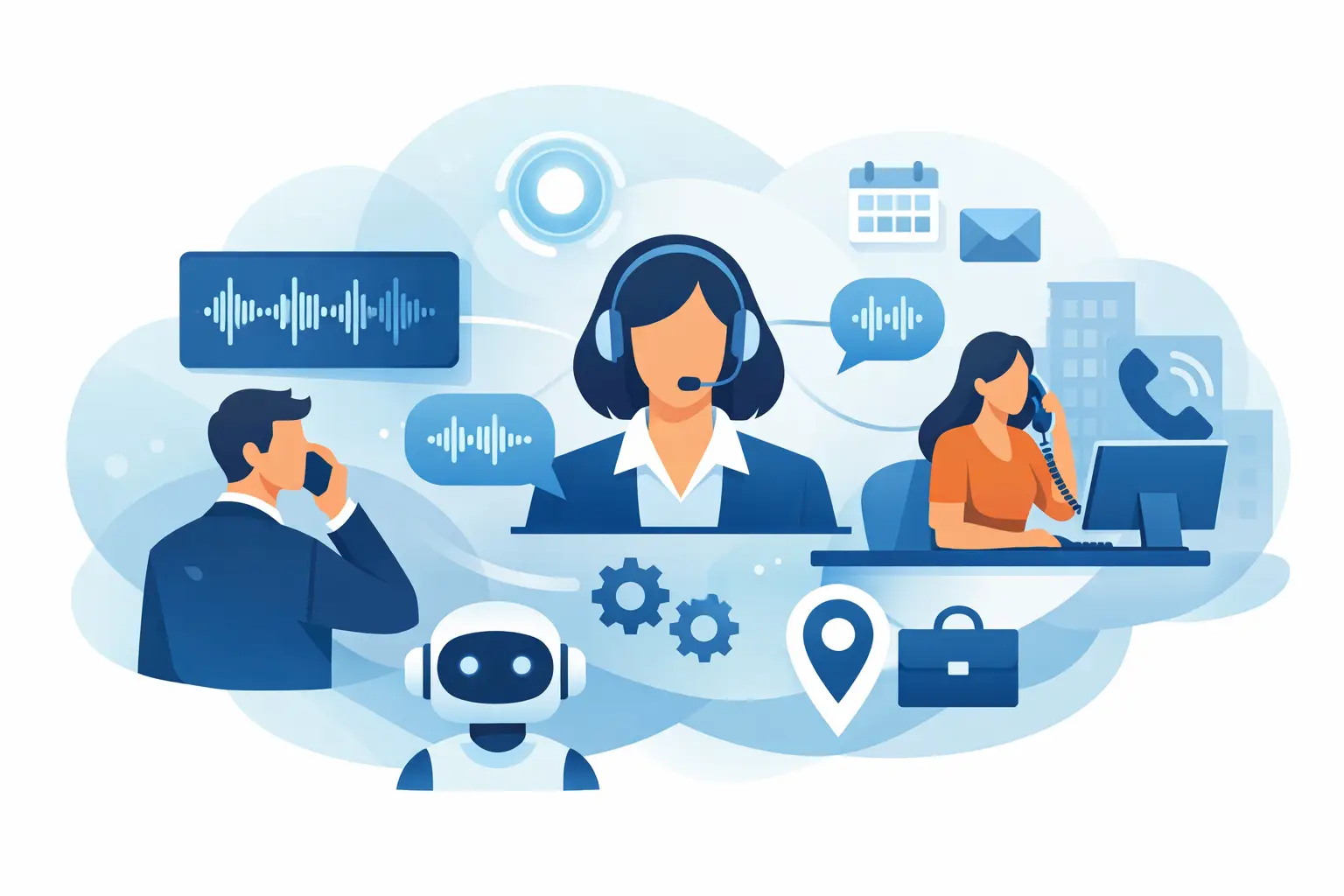
Every missed call has a price tag. If your front desk is busy, your team is short-staffed, or calls come in after hours, that lost opportunity usually goes straight to a competitor who answered faster. That is why business owners keep asking, how does an AI voice receptionist work, and can it actually help recover revenue instead of just sounding impressive?
The short answer is yes - when it is built for real business workflows. An AI voice receptionist answers inbound calls, understands what the caller needs, responds in natural language, and takes the next best action based on your business rules. That might mean booking an appointment, capturing a lead, answering common questions, routing urgent calls, or triggering a review request after the job is done.
What matters is not the novelty. What matters is whether it prevents missed opportunities.
How does an AI voice receptionist work in practice?
At a practical level, an AI voice receptionist sits between your business phone line and your caller. When someone calls, the system picks up instantly, greets the caller, and starts a real-time conversation using speech recognition, natural language processing, and voice generation.
That technical stack sounds complex, but the business function is simple. The system listens to what the caller says, figures out their intent, checks the right information, and gives a useful response. If someone says they want to book a service, the AI can collect details and place them into your scheduling flow. If the caller asks about hours, service areas, pricing ranges, or availability, the AI can respond based on the information you have already approved.
This is not the same as an old phone tree that forces callers to press buttons and wait. A true AI voice receptionist handles conversation more like a trained staff member. The caller speaks naturally. The system interprets what they mean. Then it responds based on context.
For a small business, that means fewer abandoned calls, fewer voicemails, and fewer leads slipping through the cracks.
The core steps behind every AI call
When a call comes in, the first job is answering immediately. Speed matters more than many owners realize. A ringing phone is often a buyer with intent. If they are calling a plumber, med spa, law office, HVAC company, dental office, or home service provider, they usually want help now, not later.
Once the AI answers, it converts the caller's speech into text. Then it analyzes the request to identify intent. Is this a new lead? An existing customer? A scheduling request? A cancellation? A question about business hours? An urgent issue that should be escalated?
From there, the system uses your business logic. That is where the value really comes from. The AI is not guessing what to do. It follows rules, scripts, FAQs, qualification steps, and routing paths tailored to your operation.
If the caller is a new lead, the AI may ask for their name, phone number, service address, and the reason for the call. If the call qualifies, it can book the appointment or hand it off to a live person. If the caller just needs simple information, the AI can answer without tying up your team.
Finally, the system logs the interaction. That gives your business a record of what the caller asked, what was captured, and what happened next. Good systems also push that information into your CRM, scheduling software, or follow-up workflow.
What the AI needs to know before it can perform well
An AI voice receptionist is only as useful as the information and rules behind it. It needs to be trained on the basics of your business. That includes your services, business hours, service areas, pricing guidelines, scheduling rules, call-routing logic, and the exact situations where a human should take over.
This is where some businesses get disappointed. They expect plug-and-play magic, but phone conversations are tied to real operations. If your calendar is messy, your team does not agree on lead qualification, or your policies change every week, the AI will reflect that confusion.
On the other hand, if your intake process is clear, the AI becomes a force multiplier. It answers consistently, never forgets the script, and handles volume without getting overwhelmed.
That is especially valuable for owner-led businesses where the person answering the phone may also be running the job, helping walk-ins, or managing staff.
Where AI voice receptionists make the biggest impact
The biggest win is usually not labor savings first. It is revenue recovery.
Most small businesses do not lose revenue because they lack demand. They lose revenue because they fail to capture demand consistently. Calls come in during lunch, after hours, while the team is on another line, or when the owner is in the field. The customer does not wait. They move on.
An AI voice receptionist gives you coverage during those gaps. It can answer nights, weekends, holidays, and peak periods. It can screen out low-value calls and prioritize high-intent opportunities. It can also create a more professional first impression by making sure every caller gets a fast, useful response.
For businesses that depend on local trust, there is another layer. The phone call often sits at the center of the customer journey. If that experience is smooth, you are more likely to win the booking. If the follow-up is automated properly, you are also more likely to earn the review.
That is where a revenue-focused system stands apart. It should not stop at answering calls. It should support the entire path from inbound lead to completed job to review generation.
What an AI voice receptionist can and cannot do
It can handle a lot, but not everything.
A strong AI system can answer FAQs, book appointments, collect lead information, route urgent issues, confirm appointments, and follow business rules with perfect consistency. It can also operate 24/7, which no front desk team can do without major cost.
But there are trade-offs. Some calls are too nuanced, emotional, or high-stakes for automation alone. If someone is upset, dealing with a billing dispute, or facing an unusual situation, a human handoff is often the right move. The same applies to businesses with highly customized quoting or complex service decisions.
Accent handling, background noise, and vague caller responses can also affect performance. Modern systems are much better than they were a few years ago, but they still need smart fallback paths. The best setup is usually not AI instead of people. It is AI covering the repeatable front-end work and your team stepping in where judgment matters most.
How booking, routing, and follow-up actually happen
If your goal is growth, this is the section that matters.
When the AI identifies a booking opportunity, it can move the caller through a structured intake. That may include service type, location, preferred time, urgency, and contact details. If integrated with your calendar, it can offer available slots and confirm the appointment on the spot.
If the caller should speak with a person, the AI can route the call based on urgency, department, or availability. That is far better than sending every caller to voicemail and hoping for a callback.
After the call, the system can trigger the next action automatically. It might send a text confirmation, notify your team, log the lead, or start a review request workflow after service is completed. This is where the real operational lift shows up. The business becomes faster without adding headcount.
For companies like Digital Workforce 360, that is the point of the technology. The AI voice receptionist is not a gadget. It is part of a revenue-recovery system built to stop missed calls from turning into missed sales.
How to tell if an AI voice receptionist is a good fit
If your business relies on inbound calls to generate revenue, there is a strong chance it is worth evaluating. The fit is especially strong if you miss calls after hours, have inconsistent front-desk coverage, struggle with follow-up speed, or know that review volume is lower than it should be.
The best candidates are local service businesses and SMBs where speed-to-answer directly affects conversion. If one more answered call can turn into one more booked job, even a modest improvement in call handling can produce a clear return.
Still, it depends on your workflow. If every call requires deep expertise from a senior team member, full automation may not be realistic. In that case, the right role for AI may be screening, intake, and routing rather than full-service handling.
The question is not whether AI can answer a phone. It can. The better question is whether your current call process is costing you money, and whether automation can close that gap without hurting the customer experience.
For many small businesses, the answer is obvious once they look at missed calls, slow callbacks, and lost review opportunities side by side. If the phone is one of the main ways customers reach you, then every unanswered call is a sales problem, not just an admin issue.
The smartest move is to treat your front desk like a revenue channel. When every caller gets an immediate response, the business runs tighter, the customer experience improves, and more demand actually turns into dollars.