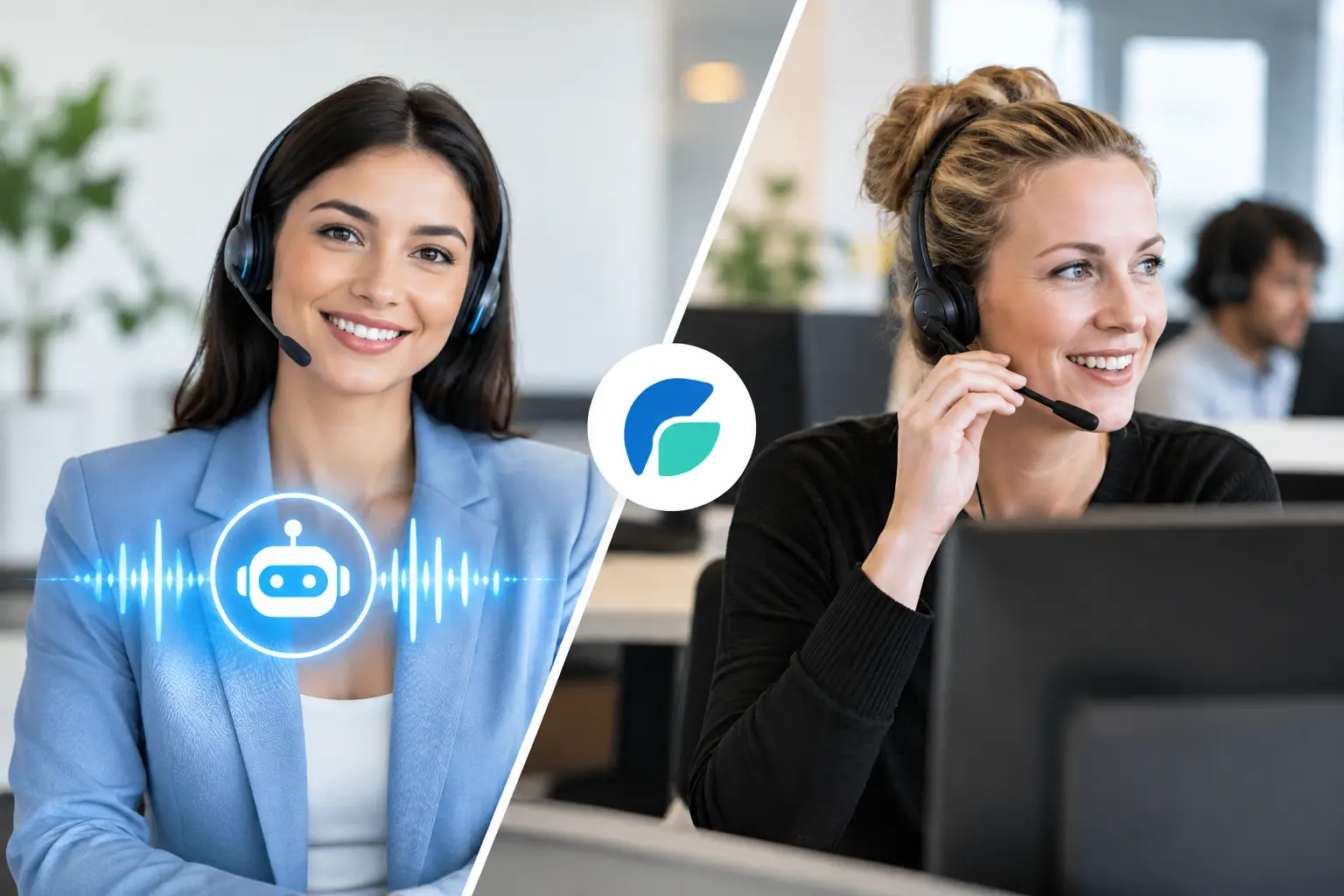
A customer calls at 6:18 p.m. ready to book, request service, or ask for pricing. If that call reaches voicemail, the opportunity is already getting colder. The AI receptionist versus answering service decision matters because it determines whether your business simply records demand or actively converts it when your team is busy, unavailable, or off the clock.
For owner-led businesses, this is not a technology debate. It is a revenue decision. Every unanswered call can become a competitor's new customer, especially in local service categories where callers often contact the next business immediately. The right solution should answer quickly, represent your business professionally, collect the right details, and move a qualified caller toward a real next step.
What an AI Receptionist Actually Does
An AI receptionist is a 24/7 voice agent configured around your business. It answers inbound calls immediately, speaks naturally, handles common questions, gathers caller information, qualifies the request, and can book appointments or route urgent conversations to the right person.
The difference is action. A properly configured AI receptionist does more than take a message. It follows the rules you set for your services, service area, availability, pricing guidance, and escalation process. A plumbing company can have it identify an active leak and prioritize emergency service. A med spa can have it answer treatment questions and guide callers to an appointment. A law office can have it capture the facts needed for an intake without asking staff to interrupt client work.
Consistency is a major advantage. The caller gets the same professional response at 8 a.m., during a staff meeting, on a Saturday, or after closing. There is no hold queue caused by a surge of calls and no variation because a part-time employee is unfamiliar with your current procedures.
That only works when the system is set up thoughtfully. Your AI needs accurate business information, clear boundaries, approved answers, and an escalation path for cases that need a human. It is not a substitute for judgment in sensitive, unusual, or high-risk situations. It is a front line built to make sure opportunities do not disappear before your team gets involved.
What an Answering Service Does Well
An answering service uses live human agents to answer calls on behalf of many businesses. These services have been a practical option for companies that need coverage outside normal hours, want a person to handle emotional or complicated callers, or operate in a field where human discretion is especially valuable.
A good agent can show empathy, listen for nuance, and adapt when a caller has an unusual situation. That can matter for certain legal matters, health-related calls, hospitality issues, or high-value client concerns. If your calls are relatively low volume but frequently complex, a human answering service may be a reasonable fit.
The limits become clear when volume rises or speed matters. Agents may be juggling calls for multiple companies. They often follow a script, take a message, and send it to your team for follow-up. That protects coverage, but it may not produce an appointment, quote request, or completed intake while the caller is still engaged.
The experience also depends heavily on the individual agent and how well the service knows your business. If scripts are outdated or agents lack access to real-time availability, callers can get generic answers that feel detached from your brand.
AI Receptionist Versus Answering Service: The Business Difference
The simplest distinction is this: an answering service is usually designed to ensure someone answers. An AI receptionist is designed to ensure the call advances.
Response speed and call capacity
Both options can provide after-hours coverage. An answering service may place callers on hold during busy periods, while an AI receptionist can answer multiple inbound calls at once. For businesses that receive bursts of demand from ads, seasonal demand, weather events, or lunch-hour call spikes, immediate response (After Hours Response That Books New Opportunities) protects more opportunities.
Speed also changes the caller's perception. A person who hears a clear, helpful answer right away is more likely to stay on the line and provide details. A person who waits, repeats information, or hears that someone will call back may keep searching.
Booking and conversion
This is where the gap is often largest. Many answering services function as message-taking layers. They can notify your team, but your business still has to contact the caller, qualify the need, and close the booking later.
An AI receptionist can handle those early conversion steps during the original call. It can identify what the caller needs, answer approved questions, collect contact information, and offer the next available appointment or direct them to the proper team member. For businesses where one booked job can be worth hundreds or thousands of dollars, reducing that follow-up gap has a direct financial impact.
Cost and scalability
Human answering services typically charge by minutes, calls, or service tiers. Costs can rise quickly as call volume increases, especially when calls run long or agents spend time on routine questions. That structure makes sense when you need human intervention on a limited number of calls.
AI receptionists are generally better suited to businesses that want always-on coverage and predictable operational costs. They can handle repetitive conversations at scale without adding another full-time front-desk salary or increasing costs every time the phone gets busy.
Price alone should not decide it. Compare the cost against the revenue recovered (AI Call Answering System Stops Revenue Loss) from calls that would otherwise reach voicemail, wait too long, or receive no meaningful next step. The cheapest option is expensive if it fails to convert a high-intent caller.
Customer experience and brand control
Some business owners assume callers will reject AI. In practice, callers care most about getting help fast. A clear, courteous voice that understands their request and can solve the immediate problem is often a stronger experience than waiting for a human agent who knows little about the business.
Still, quality matters. A poorly configured AI receptionist with vague answers can hurt trust just as quickly as an unprepared answering-service agent. Review call recordings, refine the conversation flow, and make sure the AI knows when to transfer or escalate. The goal is not to hide automation. The goal is to make every caller feel handled.
When an Answering Service Is the Better Choice
Choose a human answering service when your calls consistently require deep empathy, expert interpretation, or high-stakes judgment from the first conversation. It can also be a useful option when your business has very low call volume and only needs occasional backup coverage.
Even then, ask a hard question: does the service merely take messages, or does it help create revenue? If agents cannot book, qualify, prioritize, or accurately answer common questions, your staff is still carrying the conversion burden after the call ends.
For many service businesses, the strongest approach is not human versus AI in every situation. It is AI for immediate, consistent front-line coverage and humans for the conversations that genuinely require them. That keeps your team focused on customers, jobs, and decisions that benefit from their expertise.
How to Choose the Right Call Solution
Start with your call data. Look at when calls arrive, how many go unanswered, what callers usually want, and how long it takes your team to follow up. Then identify the revenue-producing actions your phone process should complete: booking, intake, qualification, routing, or urgent triage.
If most callers ask repeatable questions and want a fast path to service, an AI receptionist is likely the stronger revenue-recovery tool. If every call requires a detailed, sensitive conversation, human coverage may deserve a larger role. The right answer depends on the work your callers need done, not on which option sounds more familiar.
Digital Workforce 360 approaches this as a growth system, not a phone accessory. The objective is to help businesses capture more of the demand (episode 10 before you buy more advertising fix what happens next) they already generate, then support a better customer experience that strengthens the reputation needed to win the next call.
Your phone is not just an operational expense. It is one of the most direct paths between a ready-to-buy customer and your revenue. Build the first response around that reality.
Learn Business AI with 12 free AI Business Video Podcasts at: Always On AI Podcasts