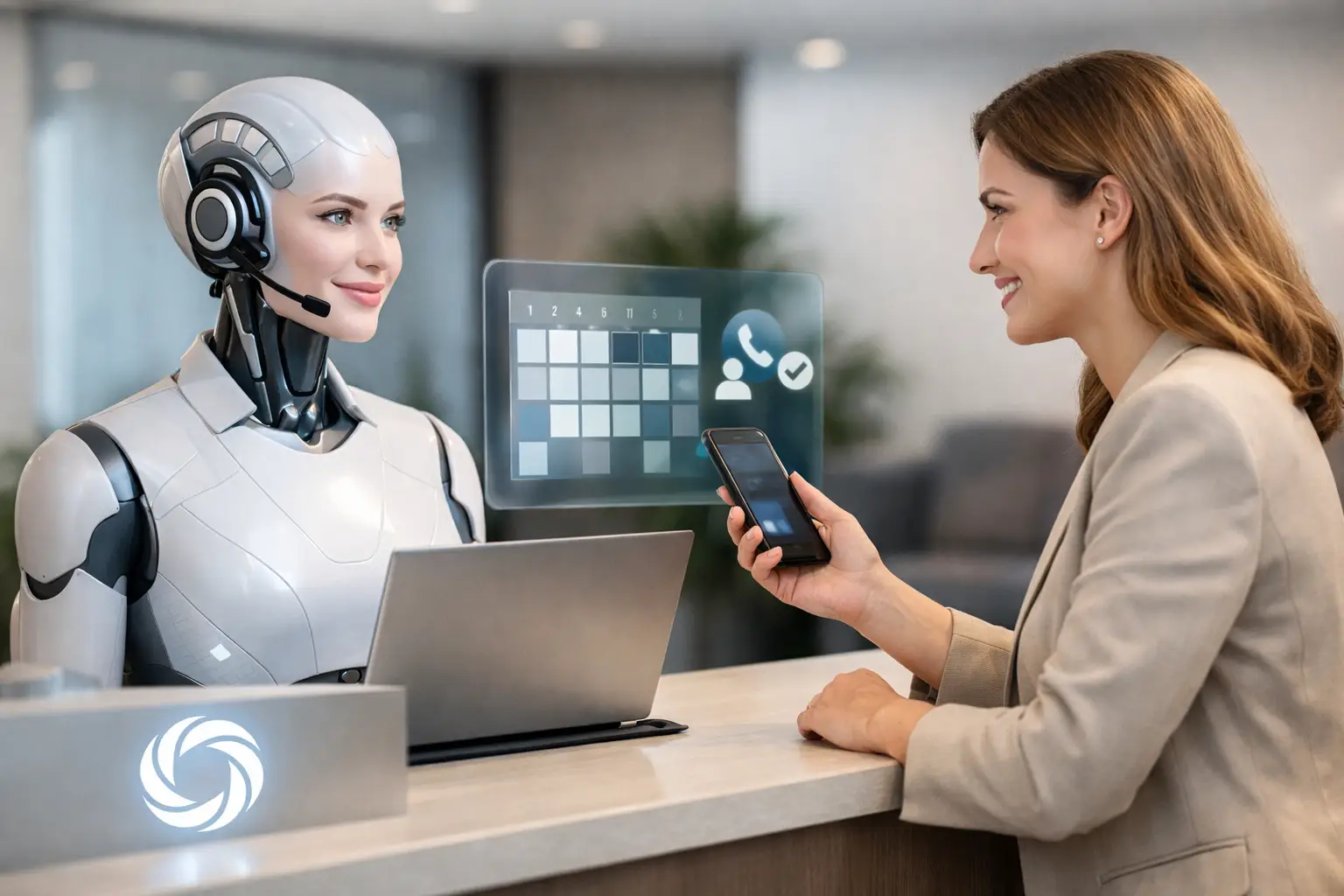
A prospect calls at 6:18 p.m. while your team is finishing a job, helping another customer, or already home. They need an appointment, have a few questions, and are ready to choose a provider. If voicemail answers, 62% of callers hang up and that revenue goes to the first business that responds. An AI receptionist for appointment booking gives that caller an immediate, professional path to schedule instead of another reason to keep searching.
For businesses that depend on inbound calls, the issue is not whether phones ring. It is how much revenue disappears when calls go to voicemail. A front desk can be excellent and still be unavailable during lunch, on the second line, with a customer in person, or after business hours. Hiring more staff may help, but it also adds payroll, training, coverage gaps, and management overhead.
The right AI receptionist solves a narrower, more valuable problem: it answers every inbound call, handles the first conversation, qualifies the caller, and books the next step while intent is high. That is not a technology project. It is revenue recovery.
Why appointment calls are too valuable to lose
A booking call is different from a casual website visit. The caller has already moved beyond awareness. They have a need, picked up the phone, and decided your business might be the answer. At that point, speed is part of the sale.
A caller who reaches voicemail does not leave a message 62% of the time. A caller told to "call back later" does not. Even when they do leave a message, a delayed response creates doubt and gives competitors time to respond first. This is especially costly for home services, medical and wellness practices, legal offices, auto shops, salons, fitness businesses, and other appointment-driven operations.
An AI receptionist protects the moment when interest becomes action. It greets callers using your business name, answers questions, collects contact and opportunity details, and offers available appointment times. The result is not merely better coverage. It is fewer missed opportunities and a more consistent first impression.
What an AI receptionist for appointment booking should do
Not every automated phone system is built to produce appointments. A basic phone tree pushes callers through menus. A useful AI receptionist carries a natural conversation and follows rules that match how your business actually operates.
For appointment booking, it recognizes why someone is calling, whether it is to request service, schedule a consultation, ask about availability, or confirm whether you handle a specific issue or service area. It gathers the information your team needs without making the caller repeat themselves.
A well-configured system collects the caller's name, contact information, service need, preferred location or technician, urgency, and scheduling preference. It can explain business information such as hours, service areas, appointment policies, or preparation requirements. Most importantly, it can access the appropriate booking process and secure a time on the calendar and send a confirmation.
The difference is operational. Instead of giving every caller the same generic response, the receptionist follows a defined path based on the call type. A new patient inquiry should not be handled like a returning customer checking availability. An emergency service request should not wait in the same queue as a routine estimate.
It should qualify before it books
More appointments are useful only if they are the right appointments. Booking unqualified callers can create wasted travel, no-shows, calendar conflicts, frustrated staff and customers.
Your AI receptionist uses the questions your best employee would ask early in the call. For a home service company, that might include the type of problem, property location, timing, and whether the caller is an existing customer. For a practice, it may include the service requested, provider preference, and whether the appointment is new or follow-up.
This is where business rules matter. Define what qualifies for a booking, what requires staff review, and what needs immediate escalation to a human. AI handles the front-end conversation. Your team should retain control over exceptions, sensitive issues, unusual pricing requests, and situations that require professional judgment.
It books from real availability
An appointment that cannot be honored costs more than the missed call it was meant to prevent. The AI receptionist accesses current schedule availability, including business hours, appointment length, and service areas.
Some businesses need direct calendar booking. Others need the system to collect and qualify the request before offering a callback window or routing it to an appointment coordinator. Neither model is automatically better. Direct booking works well when services and calendars are standardized. A review-first workflow can be smarter when pricing, staffing, travel time, or case complexity varies.
The goal is simple: make the next step fast for the caller and workable for your operation.
Where the revenue gain actually comes from
The financial case for an AI receptionist is not based on saving a few minutes of administrative time. It comes from converting demand you already paid to generate into revenue.
You may be investing in local search, paid ads, referrals, social media, signage, or reputation building. Each channel can produce calls. But when the phone goes to voicemail, the marketing spend has done its job and the operation has failed to capture the opportunity.
Consider a business that misses only a handful of qualified calls each week. If even a portion of those callers would have booked, the annual loss can become substantial. Add the lifetime value of repeat service, referrals, and future purchases, and a missed appointment is rarely a one-time loss.
An always-on receptionist also reduces the variability that hurts conversion. Every caller receives the same professional greeting, the same core information, and the same chance to schedule. That consistency matters when your staff is busy, short-handed, or after hours.
The reputation connection most businesses overlook
Appointment booking and online reputation are closely connected. The first call sets an expectation. A prompt, helpful answer signals that your business is organized and responsive. A poor or delayed response creates the opposite impression before the new opportunity can become a customer.
Once the appointment is completed, a reputation system creates a consistent process for requesting feedback from satisfied customers. More recent, credible reviews strengthen trust for the next person comparing local options. That trust generates more calls, which the AI receptionist is ready to answer and without that trust the opportunity never calls or visits your website and continues searching for a solution.
This creates a practical growth loop: stronger reviews drive more inbound demand, better call handling and a responsive website converts more of that demand into booked appointments, and a better customer experience supports future reviews. These systems must work together, not sit in separate corners of the business.
Set the system up around your real sales process
The performance of an AI receptionist depends on the instructions behind it. A generic setup can answer calls. A business-specific setup can produce revenue.
Start by mapping the calls you receive most often. Identify the questions a caller must answer before booking, the services you want to prioritize, and the circumstances that require a human handoff. Use the language your customers use, not internal jargon that only your team understands.
Then establish clear boundaries. The receptionist never invents pricing, guarantee outcomes, provides professional advice outside approved guide lines, or forces a caller through a script when the situation calls for a human. Good automation knows what it can handle and when to escalate.
Before launch, test it like a customer would. Call after hours. Ask hard questions in multiple languages. Request a service outside your area. Try to schedule something urgent. Check whether the booking confirmation contains the information your team needs. The first week of real calls will reveal adjustments, so review recordings and outcomes regularly.
Measure appointments, not call volume
A high call-answer rate is useful, but it is not the finish line. The numbers that matter are qualified appointments booked, booking rate by call type, appointments created after hours, show rate, and revenue generated from AI-handled calls.
Also look at where callers get stuck. Are they asking for information the system does not yet have? Are available times too limited? Are callers dropping before booking because the questions are too long? Those are operational fixes with direct revenue consequences.
This is why an AI receptionist should be treated as part of your sales process, not as a phone accessory. It needs ongoing oversight, clear ownership, and a willingness to improve the call flow based on real customer behavior.
A better first answer is a growth decision
Your next booked appointment may come from a caller who reaches out while your team cannot pick up. They should not have to wait for office hours, navigate a confusing menu, or wonder whether anyone received their request. They should be able to get a helpful answer and a clear next step.
Digital Workforce 360 makes businesses 24/7 Responsive and fixes the review, phone and website gaps quickly with an AI Growth System built around call capture, appointment conversion, and stronger customer trust. The practical question is not whether automation belongs in your business. It is how much booked revenue you are willing to miss and let your competitors capture.
If your business relies on the phone and your website to capture new opportunities, take a few minutes and watch our free on-demand "Why Reviews, Voicemail and Website Forms are Killing Your New Opportunities" webinar at: webinar registration. This webinar is a terrific investment of your time!