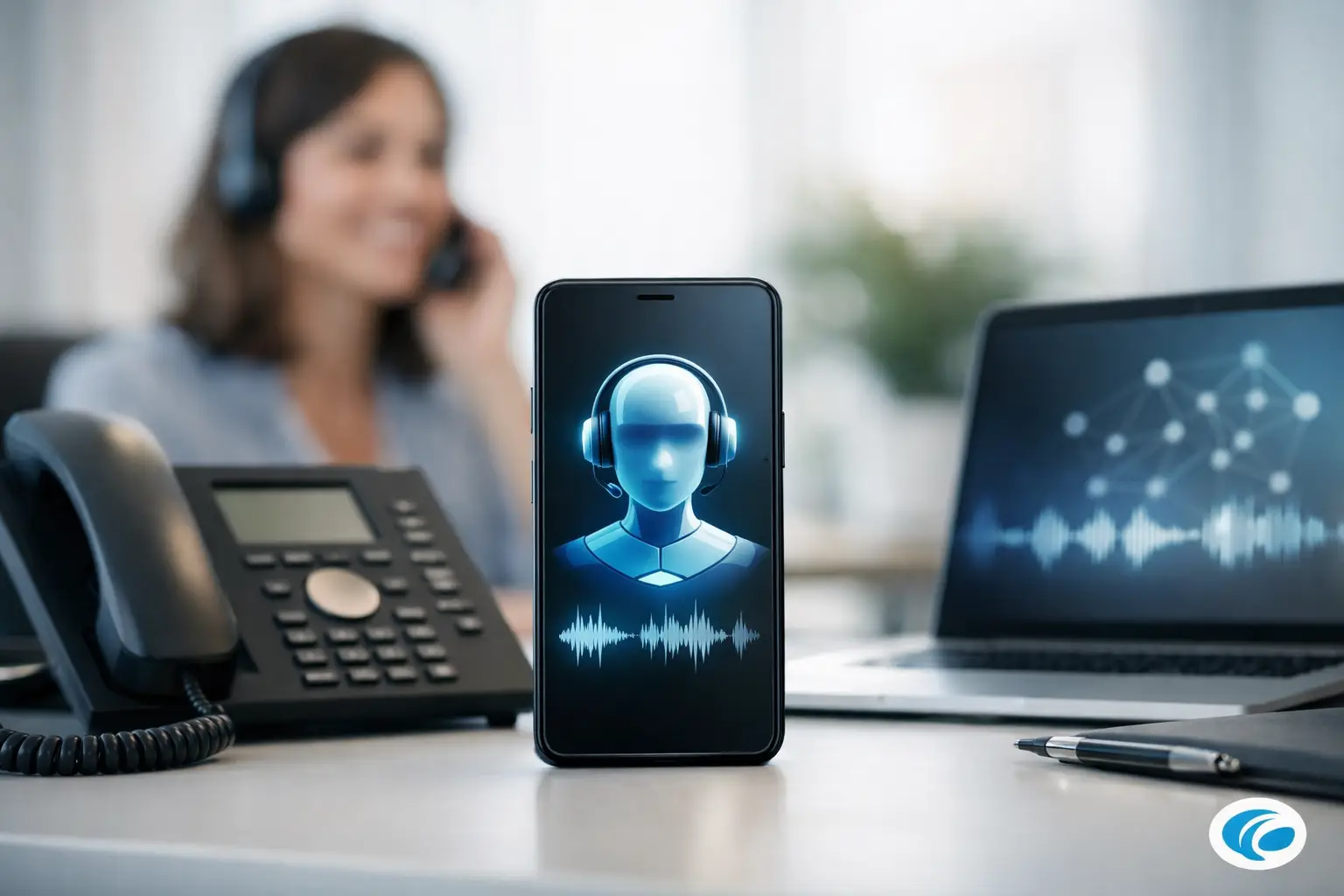
A ringing phone is not a minor interruption. For a business, it may be a new patient, an urgent repair, a high-value estimate, or a customer ready to book. This AI phone answering software review focuses on the question that matters most to an owner: does the system recover revenue, or does it simply sound impressive in a demo?
The difference is substantial. Many tools can answer a basic question. Far fewer can handle a real customer conversation, represent your business accurately, capture the details your team needs, and keep opportunities moving when your staff is busy or the office is closed. The right system turns every inbound call into a managed sales opportunity. The wrong one creates confusion, frustrated callers, and another task for your team to clean up.
What AI Phone Answering Software Should Actually Do
AI phone answering software uses conversational voice technology to answer inbound calls and respond to callers based on rules, business information, and approved workflows. It is often positioned as a lower-cost alternative to a live receptionist or answering service. That comparison is useful, but incomplete.
A receptionist's real value is not saying hello. It is determining why someone called, providing accurate answers, recognizing urgency, collecting the right information, and directing the next step. An AI receptionist should be evaluated by the same standard.
For most local and service-based businesses, the core job is straightforward: answer every call 24/7, qualify the caller, handle routine questions, capture lead details, and help the customer take action. Depending on the business, that action may be booking an appointment, requesting an estimate, routing an emergency call, or sending the opportunity to the right person for follow-up.
If a platform only recites office hours and takes a message like voicemail (where 62% of first time business callers hang up instead of leaving a message), it may reduce some pressure on staff. It is not necessarily a revenue-recovery system. The better question is whether it helps you convert calls that would otherwise go unanswered, abandoned, or mishandled.
AI Phone Answering Software Review: The Criteria That Matters
Software comparison pages often focus on features: voices, languages, integrations, dashboards, and plans. Those details matter, but business owners should start with operational outcomes. A useful review measures whether the software performs under the conditions that cause missed opportunities in the first place - lunch rushes, job sites, peak call volume, after-hours inquiries, and weekends.
Call handling quality is the first test
The system needs to sound professional, but natural speech alone is not enough. Listen for whether it interrupts callers, handles hesitation, understands common phrasing, and asks sensible follow-up questions. A polished voice that gives the wrong answer is worse than a plain voice that captures the lead correctly.
Ask how the platform is trained on your business. Can it reflect your services, service area, policies, pricing boundaries, availability, and escalation rules? Can you review and adjust what it says? Business leaders should not have to choose between a generic script and an open-ended AI that improvises its way into a customer-service problem.
Accuracy matters most in businesses with urgent or high-consideration calls. A plumbing company needs different routing logic than a med spa. A law office needs different intake questions than an HVAC contractor. The software should fit the workflow, not force the workflow to fit a generic bot.
Lead capture must create a usable next step
An answered call only has value when the opportunity is documented and acted on. Look closely at what information the AI captures and how your team receives it. At minimum, it should reliably identify the caller, reason for the call, relevant service need, timing, and urgency.
Then consider what happens next. Can the caller book? Is the information routed to the correct team member? Can staff quickly see the conversation context before responding? A weak system creates vague messages such as, “Someone called about a service.” A useful system produces a qualified opportunity with enough detail to move quickly.
This is where ROI becomes visible. If your team spends time chasing incomplete messages, the software is shifting work, not removing it. If it delivers clear, actionable leads, it protects staff time while improving response quality.
Control and escalation prevent expensive mistakes
No AI system should be left without guardrails. The provider should offer clear controls for what the receptionist can answer, what it should collect, and when it must transfer, escalate, or take a message for a human.
Review how emergencies, complaints, sensitive questions, and unusual requests are handled. A business does not need automation to solve every edge case. It needs automation that recognizes when a human needs to step in.
The best setups are specific. They define business hours, emergency criteria, services offered, booking parameters, and caller priorities. They also include ongoing tuning. Call patterns change, seasonal offers change, and recurring customer questions reveal where scripts and workflows need improvement.
Reputation support can multiply the return
Phone answering and reputation management are often treated as separate problems. They are not. Both are moments when a customer decides whether your business feels responsive, organized, and worth trusting.
A business that answers promptly creates a better first impression. A business that consistently follows through after positive customer interactions has more opportunities to earn reviews. More recent, credible reviews can improve trust before the next prospect ever picks up the phone.
That is why an AI Growth System can be more valuable than a standalone answering tool. Digital Workforce 360 combines a 24/7 AI voice receptionist with reputation support because revenue is not recovered by answering calls alone. It is recovered by improving the full path from first contact to customer confidence and follow-up.
The Trade-Offs to Consider Before You Buy
AI phone answering software is not an automatic fit for every operation. If calls are highly complex, involve regulated advice, or require deep relationship knowledge, the AI may be best used for intake, triage, and scheduling rather than full call resolution. That is still valuable when it prevents calls from going to voicemail.
There is also a setup trade-off. The fastest, cheapest option may use generic prompts and limited customization. It can be adequate for basic call coverage, but it may not reflect how your business actually sells or serves customers. A done-for-you implementation that maps your real call flows generally produces a stronger outcome, especially for an owner who does not have time to build, test, and maintain automations.
Price should be assessed against recovered opportunities, not just against a receptionist's hourly wage. Start with a simple calculation: how many calls do you miss each week, what percentage could become qualified leads, and what is the average value of a new customer? Even a modest improvement can justify the investment when one booked job, patient, or client covers a meaningful portion of the monthly cost.
Be cautious with vendors that promise a human-equivalent experience without discussing call review, escalation logic, or performance reporting. A credible provider should be willing to show how success is measured. That could include answered-call rate, leads captured, appointments booked, call outcomes, response time, and revenue attributed to recovered opportunities.
Questions to Ask During a Demo
A productive demo should look like your business, not a generic conversation about ordering pizza or checking store hours. Give the provider real caller scenarios: a price shopper, an urgent caller, a caller asking about a service you do not offer, a returning customer, and someone who wants the next available appointment.
Ask who builds the call flows, how quickly the system can go live, and what happens after launch. Clarify whether you can access call transcripts or recordings for quality review, how changes are requested, and how the provider handles incorrect responses. Also ask what the AI does when it is uncertain. A system that can gracefully gather details and involve your team is safer than one that confidently guesses.
Choose Revenue Recovery Over Another App
The strongest AI phone answering software does not ask you to become a technology manager. It should remove a persistent leak in your operation: valuable callers reaching voicemail, waiting too long, or getting inconsistent answers when your team is stretched.
Choose a system that earns its place by answering every call with purpose, collecting information your team can use, and supporting the trust signals that help prospects choose you. When every inbound opportunity gets a professional response, growth stops depending on who happened to be available when the phone rang.
If your business relies on the phone and your website to capture new opportunities, take a few minutes and watch our free on-demand "Why Reviews, Voicemail and Website Forms are Killing Your New Opportunities" webinar at: webinar registration. This webinar is a terrific investment of your time! Watch to the end for a huge webinar bonus.