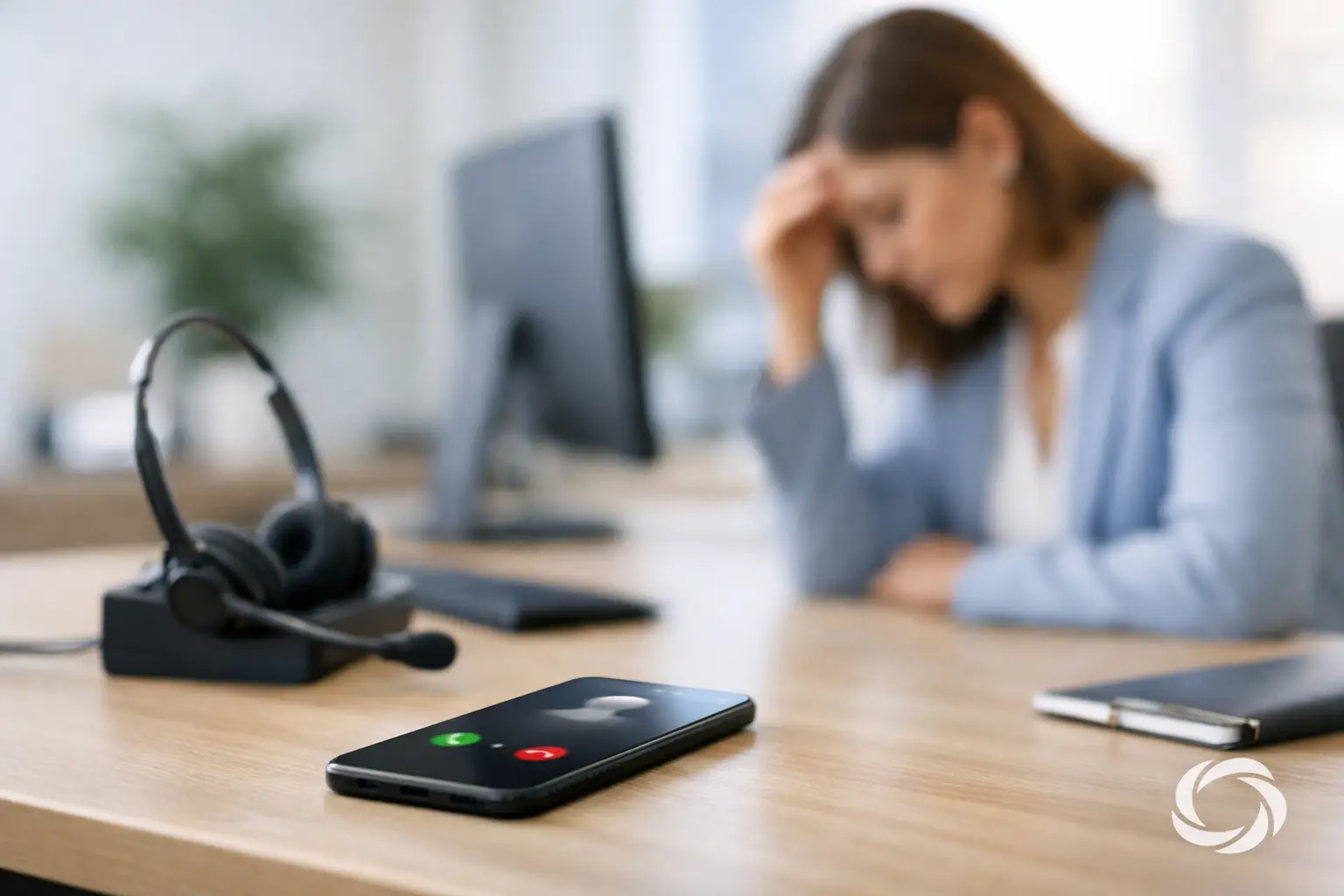
A customer calls when they are ready to act. They need to book, ask a pricing question, confirm availability, or solve a problem before they move on. If voicemail answers, that moment does not pause. It goes to the next business. That is what happens 62% of the time when calls go to voicemail, and for most businesses, the cost is much bigger than one missed conversation.
A voicemail call is rarely just a missed ring. It is often a lost appointment, a lost estimate, a weaker first impression, and one more customer who never makes it into your pipeline. If your business depends on inbound opportunities, your phone is not a side channel. It is a revenue channel.
What happens when calls go to voicemail in real life
Most business leaders underestimate the chain reaction. They think in terms of one missed opportunity. The customer thinks in terms of urgency. If they are calling a roofer after a storm, a med spa on their lunch break, a law office after an accident, or a home service company while managing a busy day, they are not sitting around waiting for a callback that may or may not come.
They call the next number.
That is the first financial hit. You paid for that opportunity somehow, whether through SEO, ads, referrals, truck wraps, direct mail, repeat business, or your local reputation. The phone rang because your business earned attention. When voicemail answers, the money spent to create that opportunity stops producing a return.
The second hit is operational. Unanswered calls create uneven demand management. Your team gets slammed during staffed hours and invisible leaks happen the rest of the time. Leaders often respond by buying more marketing, when the real problem is that existing demand is not being captured consistently.
The third hit is reputational. Customers judge responsiveness If they cannot reach you, they may assume you are understaffed, disorganized, or hard to work with. Even if your actual service is excellent, the buying decision often gets made before you ever get a chance to prove it.
The revenue loss is not hypothetical
If your average job value is meaningful, missing even a small number of calls each week adds up fast. A few missed booking calls a week can turn into tens of thousands in lost annual revenue. For some businesses, it is much more.
This is where business leaders get trapped. They do not see missed revenue on a profit and loss statement. They see weaker months, less opportunities in the funnel, lower conversion from marketing spend, and fewer booked jobs than expected. The leak is real, but it hides inside normal business noise.
That makes voicemail calls dangerous. They do not always create a dramatic failure. They create quiet underperformance. You stay busy enough to think things are fine, while a portion of your best opportunities keep slipping away.
Why customers do not give you a second chance
Business owners sometimes assume callers will leave a voicemail message, wait for a callback, or try again later. Some do. 62% don't.
People call because they want speed. They want an answer, a next step, or a clear path to doing business with you. The faster they can get certainty, the faster they can make a decision. If your competitor answers first, your competitor wins.
This is especially true in local service markets where multiple providers offer similar work. Customers may not know who is best, so availability and responsiveness become the deciding factors. In that environment, answering the phone is not admin. It is sales.
There is also a trust issue. A voicemail call introduces friction at the exact moment a customer is evaluating reliability. If they are already wondering whether you will show up on time, communicate clearly, or follow through, a voicemail call reinforces the wrong answer.
What happens when calls go to voicemail after hours
After-hours demand is one of the biggest blind spots in business operations. Owners often assume those calls can wait until morning. Sometimes they can. Often they cannot.
Plenty of customers research and reach out outside normal business hours because that is when they finally have time. Others are dealing with urgent needs that do not fit a 9-to-5 schedule. If your business goes silent nightly, on weekends, or during holidays, you are effectively closed when real buying intent still exists. We live in a 24/7 world and consumers expect your business to be 24/7 responsive.
That matters because after-hours callers are often high-intent opportunities. They are not casually browsing. They are trying to solve something now. If they cannot get a response, they keep moving.
A business that can respond 24/7 has a competitive advantage over a business that only responds when someone is free. It captures demand and books opportunities while competitors are unavailable. That edge compounds over time.
Voicemail also hurts reviews and reputation
The phone affects more than bookings. It affects how people talk about your business.
When communication is inconsistent, customers feel ignored before the relationship even starts. That lowers goodwill. Some will simply disappear. Others will leave with a negative impression and share it publicly. Even if they never became paying customers, the damage can still show up in your online reputation.
On the other side, businesses that handle calls and respond consistently create smoother customer journeys. That improves satisfaction and makes it easier to generate more positive reviews over time. More reviews, and better reviews, strengthen conversion across every other channel. Your website works better. Your ads work better. Your search visibility improves. Trust rises before the phone ever rings.
This is why call handling and reputation are connected. Poor responsiveness suppresses both revenue and credibility at the same time.
The internal cost is bigger than most teams realize
Calls to voicemail are often treated as a staffing problem, but the real issue is consistency. Front-desk teams get busy. Owners are in the field. Staff turnover happens. Lunch breaks happen. Peak call windows collide with in-person service. Even strong teams miss opportunities when the system depends on perfect availability.
Hiring more people can help, but it is not the most economical fix. Labor is expensive, coverage gaps remain, and quality varies by person, training, and time of day. For many businesses, the better question is not how to force a human team to be available at all times. It is how to build a reliable response system that does not break when the day gets busy.
That is where automation makes business sense. Not as a novelty. Not as a tech experiment. As infrastructure for revenue capture.
The practical fix is simple: stop relying on chance
If inbound calls drive sales, your business needs a system that answers every time, qualifies and books opportunities, routes conversations properly, and keeps the customer moving forward. Anything less means opportunities are sent to your competition.
The right setup does more than pick up the phone. It protects the customer experience, reduces pressure on staff, and makes your operation look more professional from the first interaction. It also gives you a more stable foundation for growth because you are not pouring more demand into a leaky bucket.
For some companies, that means tightening call workflows and coverage. For others, it means using an AI voice receptionist that can answer 24/7, handle inquiries, capture intent, qualify and book opportunities and support the handoff to your team when required without hiring another full-time employee.
24/7 Customer Responsive wins more business.
Digital Workforce 360 is built around that reality. The goal is not to add another tool to your stack. It is to recover revenue that is already trying to reach you, while strengthening the customer experience and supporting review growth at the same time.
If your phone is ringing, the market is already telling you something
There is a simple way to think about this. Every inbound call is proof of demand. Someone found you, trusted you enough to reach out, and wanted to take a next step. When that call goes to voicemail, your business does not just miss a conversation. It wastes marketing and opportunities.
That is why the real cost of voicemail calls is not measured by phone logs. It is measured by the jobs never booked, the customers who chose someone else, and the reputation lift that never happened because the experience broke at hello.
If you want more growth without constantly increasing ad spend or headcount, start with responsiveness. The easiest revenue to recover is the revenue already calling you.
Digital WorkForce 360 will make your business 24/7 Customer Responsive in 72-hours and eliminate the responsiveness gaps that are losing opportunities. Visit us at digitalworkforce360.com and we'll plug those opportunity leaks for $15.97/day, yes per day and not per hour!