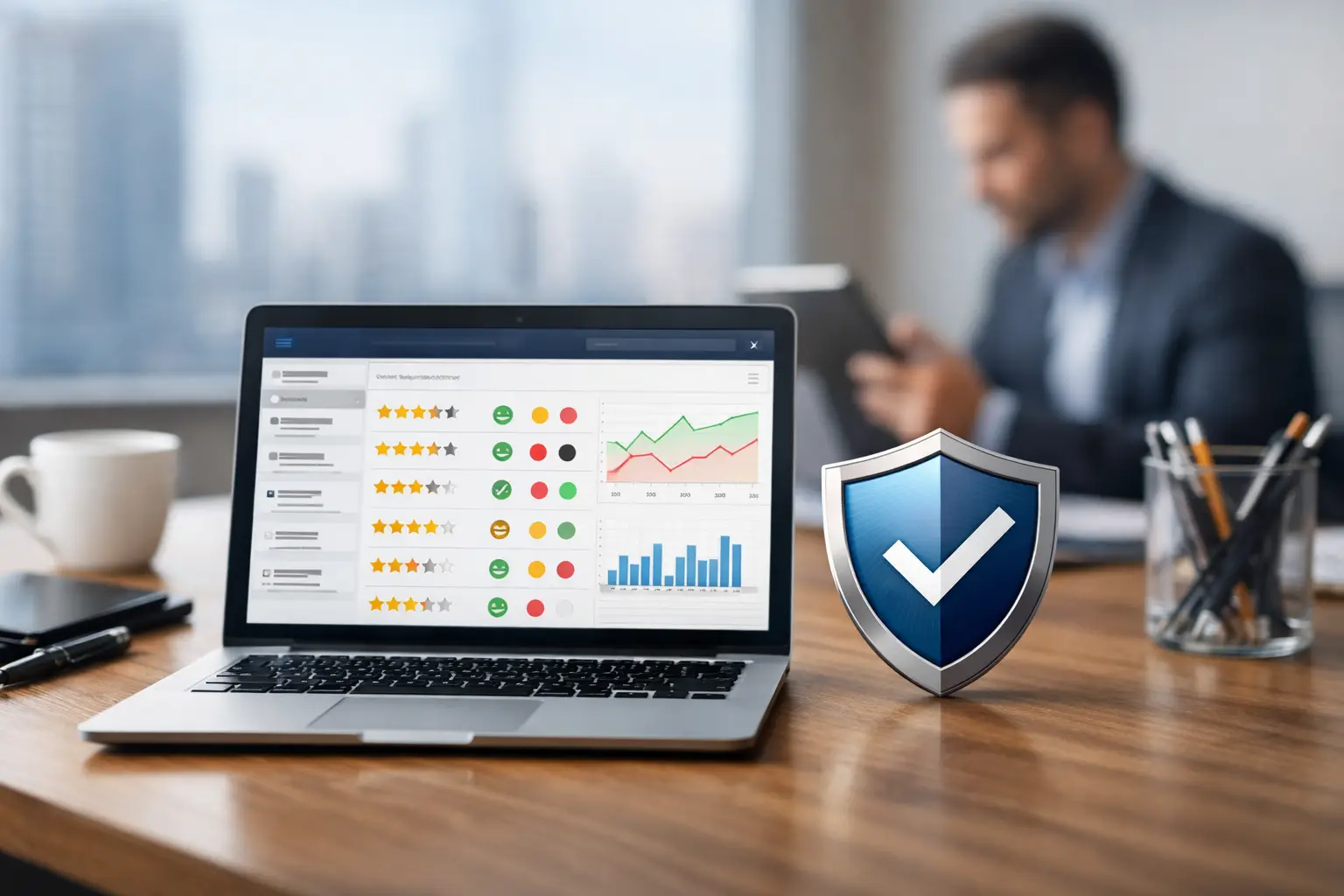
A one-star review is rarely just a reputation problem. For a service business, it can be a warning that calls are going unanswered, customers are waiting too long for help, or a small issue is becoming public before anyone on the team sees it. Review monitoring software gives owners a way to spot those revenue leaks before they cost the next opportunity.
The goal is not to obsess over every comment. It is to create a dependable system for knowing what customers are saying, responding to every review, and using feedback to improve the moments that affect sales. When your phone is ringing, your team is busy, and customers expect fast answers, that system can protect far more than your star rating.
Why reviews have become a revenue operations issue
Local customers make fast decisions. They search, compare ratings, read a few recent comments, and decide whether your business feels responsive and trustworthy. A business with a strong average rating but several recent unanswered complaints can still lose the call.
Reviews also reveal operational gaps that reports often miss. A customer may mention that nobody answered the phone, that an appointment confirmation was unclear, or that they had to follow up multiple times. Each complaint points to a process that can drain revenue long before it appears on a profit-and-loss statement.
That is why review management cannot sit in the category of optional marketing tasks. It is part of customer response, retention, and conversion. The business that sees issues quickly and handles them professionally has an advantage over the business that discovers a public complaint weeks later.
What review monitoring software should actually do
The right platform should reduce manual checking and give your team a clear path from feedback to action. At a minimum, it should collect reviews from the platforms where your customers are most likely to leave them, organize them in one place, and alert the right person when attention is needed.
But monitoring alone is not enough. A dashboard full of reviews does not recover revenue if no one has time to review it, decide what deserves a response, and follow through. The best systems support a defined workflow: identify the review, understand the customer issue, respond promptly, and route any service recovery task to the person who can resolve it.
For most small and mid-sized businesses, the value comes from speed and consistency. You should be able to see whether new reviews are positive, neutral, or negative without logging into multiple profiles. You should also be able to identify patterns. If three customers mention slow callbacks in a month, that is not a one-off complaint. It is a sales process problem.
The difference between monitoring and reputation growth
Monitoring is reactive by nature. It tells you what has already been said. Reputation growth is proactive. It creates a consistent process for asking customers for feedback at the right point in their experience.
Both matter. Monitoring protects your reputation when an issue surfaces. Review generation helps ensure that a handful of unhappy experiences do not define how the market sees your business. Without a steady flow of recent, legitimate reviews, even a well-run company can look inactive or less credible than a competitor.
The key is to avoid treating review requests as a random task someone handles when they remember. If the process depends on a busy front desk or an owner finding spare time, it will be inconsistent. A system should make the next step clear after a positive customer interaction.
How to evaluate review monitoring software
Start with your actual customer journey, not a feature checklist. Ask where customers contact you first, when they are most likely to leave feedback, and who currently owns the response. A home service company, dental office, law firm, and auto shop may all need review monitoring, but the urgency and workflow will look different.
A useful solution should give you clear visibility across the review channels that influence your local market. It should also make notifications practical. An alert that arrives instantly but goes to a person who cannot act on it is not useful. Decide who needs to know about negative feedback, who can respond, and how quickly they are expected to do so.
Look closely at these four areas:
- Coverage: The software should monitor the review sites that influence your buyers, rather than forcing you to pay for a broad list of channels that do not matter to your market.
- Alert quality: You need timely notifications for new reviews, especially negative ones, without creating so much noise that the team starts ignoring alerts.
- Response workflow: The system should make it easy to assign, track, and complete responses. Draft assistance can save time, but the final message should still sound human and specific.
- Reporting tied to action: Look for trend reporting that helps you identify recurring complaints, location-level issues, and response gaps. Vanity metrics alone will not fix a customer experience problem.
There is a trade-off here. Low-cost tools can centralize reviews, but they may still leave the owner responsible for every alert, response, and follow-up. Larger enterprise platforms can offer deep reporting, yet create more complexity than a single-location business needs. The best fit is the one your operation will use consistently, with enough support to turn insight into action.
Responding to reviews without making the problem worse
Speed matters, especially with negative feedback, but a rushed response can create another problem. Public replies should acknowledge the concern, stay professional, and show that the business is taking the issue seriously. They should not argue, expose customer details, or make promises the team cannot keep.
A short, thoughtful response often does more for future customers than a defensive explanation. People reading reviews understand that mistakes happen. What they want to see is whether the business takes responsibility and responds like a professional.
Positive reviews deserve attention too. A genuine thank-you reinforces the customer relationship and demonstrates engagement to prospects. Avoid copied responses that make every customer feel like they received the same automated message. Efficiency is valuable, but credibility is more valuable.
For recurring issues, do not stop at the reply. If reviews repeatedly mention unanswered calls, delayed estimates, unclear pricing, or long wait times, assign an operational owner and fix the process. Otherwise, your team is managing symptoms while the revenue leak continues.
The hidden connection between calls and reviews
Many negative reviews begin before the customer ever receives service. They start when a prospect calls during a busy period, after hours, or while the team is focused on another customer. If that caller cannot get a clear answer or next step, frustration builds quickly. By the time they leave a review, the business may have already lost the sale.
This is where reputation management and customer communication need to work together. A [24/7 AI receptionist can answer inbound calls, capture intent, provide the right information, and create a more consistent first impression. When customers get an immediate response, there are fewer preventable frustrations to manage later.
Digital Workforce 360 approaches this as a revenue-recovery system, not simply another dashboard. Review visibility matters, but it becomes more valuable when paired with always-on call handling and a consistent process for turning satisfied customers into credible online feedback.
Build a process your team can sustain
Review monitoring software works best when it has a simple operating rhythm. Someone should review incoming feedback daily or at least several times per week, with clear escalation rules for urgent complaints. Response standards should be defined before a problem appears, not invented under pressure.
Keep the process tied to outcomes. Track response time, review volume, rating trends, recurring complaint themes, and the operational fixes those themes trigger. Then compare those signals with booked jobs, and customer retention. You may not be able to attribute every sale to a review, but you will see whether trust and responsiveness are improving together.
Do not expect software to compensate for a broken customer experience. It can show you the truth faster, help you respond more consistently, and create accountability. The business still has to answer customers, solve valid problems, and ask happy clients to share their experience.
Your reputation is built in the minutes when a customer needs you most. Put a system behind those minutes, and every review becomes more than public feedback. It becomes a chance to protect the next call, the next booking, and the revenue your business already worked hard to earn.
If your business relies on the phone and your website to capture new opportunities, take a few minutes and watch our free on-demand "Why Reviews, Voicemail and Website Forms are Killing Your New Opportunities" webinar at: AI resources. This webinar is a terrific investment of your time! Watch to the end for a huge webinar bonus.