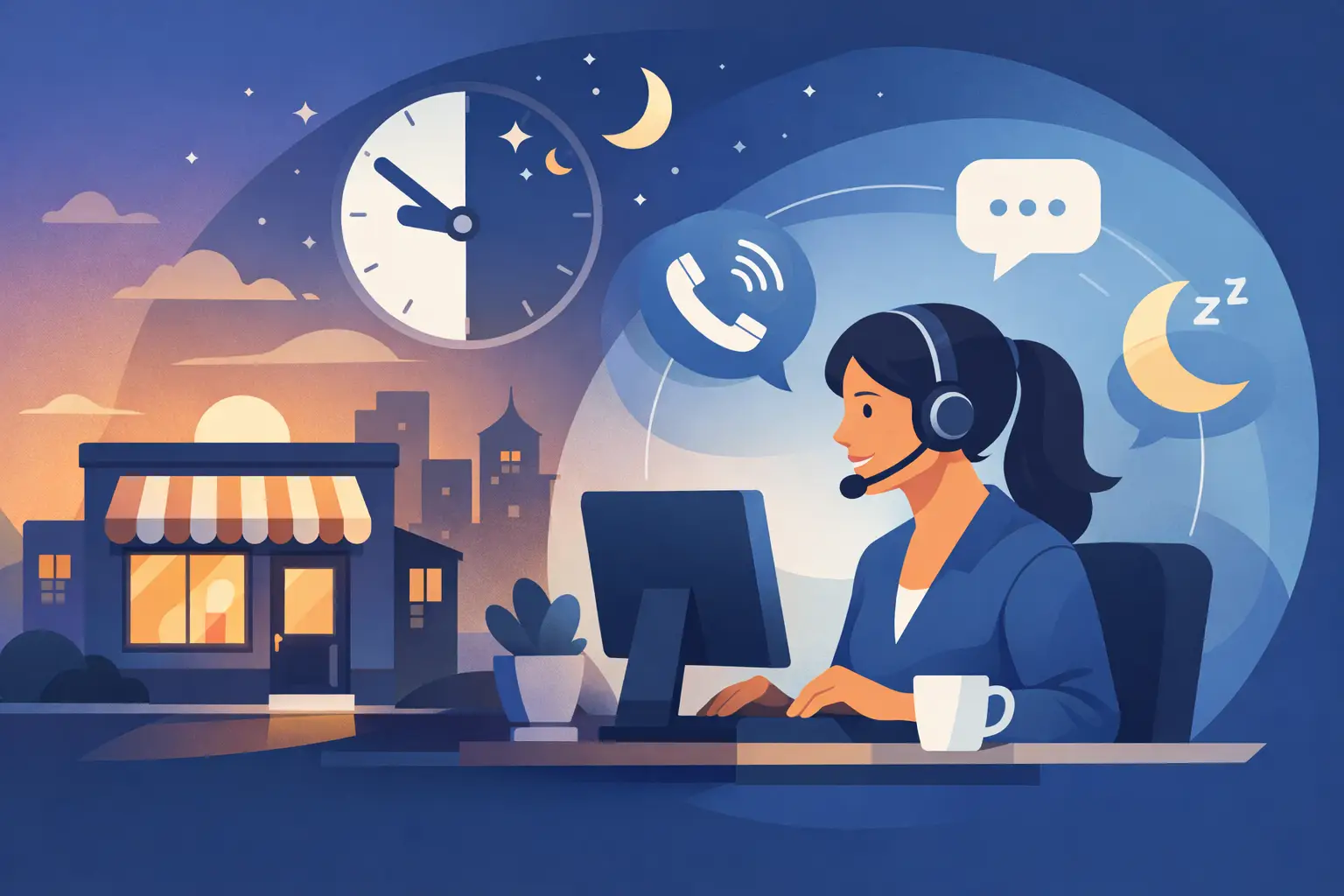
A missed call at 7:12 p.m. does not feel dramatic in the moment. By the next morning, it is usually invisible. But for businesses that rely on inbound calls, that one missed opportunity can turn into a booked competitor, a lost estimate, or a customer who never calls back. That is why after hours call answering for small business is not a nice-to-have. It is a revenue control system.
For local service companies, medical practices, home contractors, legal offices, and other owner-led businesses, the phone still closes real business. People call when they are ready to ask a question, compare options, or schedule now. If no one answers, many do not leave a voicemail. They move on. The real cost is not the missed ring. It is the sale, appointment, or long-term customer value attached to it.
Why after hours call answering for small business matters
Most small businesses think of missed calls as an occasional staffing issue. In reality, they are a conversion problem. Calls go unanswered after hours, during lunch, while staff are helping walk-ins, or when the front desk is overwhelmed. The pattern is common, and the financial impact adds up faster than most owners realize.
A customer calling after hours is often high intent. They are not browsing casually. They may have just found your business online, checked your reviews, and decided to reach out. If that customer gets voicemail, the odds of losing them are high. In many industries, speed to response matters as much as price.
This is where after-hours coverage changes the equation. Instead of letting demand hit a wall when the office closes, you create a way to capture, qualify, and respond to callers when they are ready. That keeps your pipeline moving even when your staff is not available.
The hidden cost of letting calls go to voicemail
Voicemail sounds responsible, but it rarely performs like a real conversation. Most callers do not want to explain their issue to a recording, wait for a callback, and hope someone follows up. They want a clear answer, a next step, or at least confidence that someone is paying attention.
The problem gets worse when callback processes are inconsistent. One employee returns calls quickly, another forgets, and another writes a number on a sticky note that disappears by morning. That kind of follow-up gap is where small businesses quietly lose revenue every week.
There is also a reputation impact. Customers judge responsiveness. If they call and get silence, that shapes their perception before you ever speak with them. In competitive local markets, professionalism is not just about the service itself. It starts with how accessible your business feels.
What good after-hours call answering actually does
Strong after-hours call handling is not just about picking up the phone. It should move the customer toward action. That means answering promptly, gathering the right details, handling common questions, routing urgent situations correctly, and creating a reliable record for follow-up.
For some businesses, that means booking appointments directly. For others, it means collecting lead information, qualifying the request, and sending a clean summary to the team for the next business day. In emergency-driven industries, it may also mean escalating priority calls to an on-call staff member.
The right setup depends on your business model. A plumber with emergency service needs a different workflow than a med spa or dental office. The point is not to force every caller into the same script. The point is to make sure no legitimate opportunity dies because no one answered.
Human receptionists, outsourced teams, and AI
Small business owners usually look at three options. They can hire more in-house coverage, use a traditional answering service, or use AI-based call answering. Each option has trade-offs.
Hiring in-house gives you control, but it is expensive and hard to maintain outside normal office hours. Nights, weekends, sick days, turnover, and training create a lot of friction for a role that needs consistency.
Traditional answering services can help, but many are generic. They may answer calls, take messages, and forward information, but the experience often feels detached from your actual business. If the scripts are too broad or the agents are handling too many industries at once, quality drops.
AI call answering has become a practical middle ground for businesses that need speed, coverage, and cost control. A well-configured AI voice receptionist can answer immediately, follow business-specific workflows, capture caller information, and route or log conversations consistently. It does not get tired, miss shifts, or forget what to ask.
That said, not all AI setups are equal. If the system is poorly trained, overly robotic, or disconnected from your business process, it can create frustration instead of value. The win comes from matching the technology to real customer scenarios, not from using AI for its own sake.
How to evaluate after hours call answering for small business
Business owners should start with outcomes, not features. The first question is simple: what happens to a missed call today? If the answer is voicemail and crossed fingers, there is a revenue leak.
Next, look at your call patterns. How many calls come in after hours, during weekends, or during peak periods when staff cannot answer? If even a small percentage of those are new leads, the math matters. One missed job can be worth far more than the monthly cost of fixing the issue.
Then assess what your after-hours system needs to accomplish. Do you need appointment booking, basic FAQs, emergency triage, intake forms, bilingual support, or review follow-up? Different businesses need different levels of handling. A generic solution may be cheap, but cheap stops looking cheap when it loses good leads.
It also helps to measure response quality, not just response speed. Can the caller get a useful answer? Does the interaction feel professional? Does your team receive accurate information the next morning? If the handoff is messy, the problem is only half solved.
Revenue recovery is the real metric
The smartest way to look at after-hours answering is through recovered revenue. If your business misses five qualified calls a week, and one or two of those would have become paying customers, the annual loss is significant. Most owners underestimate this because they only see booked work, not demand that disappeared.
A good system pays for itself when it converts more of the demand you are already generating. That matters even more if you are spending on ads, SEO, local listings, or referral campaigns. Driving calls to your business and then not answering them is one of the most expensive forms of leakage.
This is also where call handling connects to reputation. When customers get a prompt, professional response, they are more likely to trust the business, follow through, and leave positive feedback later. Better responsiveness can improve both short-term conversion and long-term credibility.
Where small businesses usually get this wrong
The most common mistake is assuming missed calls are unavoidable. They are common, yes. Unavoidable, no. Another mistake is choosing a solution based only on price. If the cheaper option answers the phone but fails to convert the caller, it is not saving money.
Some businesses also overcomplicate the setup. They build too many menu options, too many routing paths, or too much scripted language. Customers want clarity. The best after-hours experience is fast, simple, and useful.
Finally, many owners fail to review call outcomes. If you never audit what happens after hours, you will not know whether the system is capturing leads, frustrating callers, or creating follow-up gaps for your team.
A better standard for after-hours coverage
Small businesses do not need enterprise call centers. They need reliable coverage that protects revenue when the office is closed or the team is stretched thin. That can mean AI, human support, or a hybrid model. What matters is that calls are handled in a way that reflects your brand and moves customers toward the next step.
For businesses focused on growth, after-hours answering should be treated like any other sales process. It deserves structure, measurement, and accountability. If a customer is ready to call, your business should be ready to respond.
Digital Workforce 360 approaches this problem the right way - not as a phone system upgrade, but as a revenue recovery strategy built around missed calls, follow-up consistency, and customer trust.
If your phone goes quiet after business hours, that does not mean demand stopped. It usually means opportunity is landing when no one is there to catch it.